

Introduction
In an age where digital technologies, artificial intelligence, and automation increasingly shape how organizations operate, leadership is being redefined. While technical expertise and digital fluency have become essential, they are no longer sufficient on their own. Leaders today are evaluated not only by what they know, but by how they relate, inspire, and connect with others in complex, fast-changing environments. Research suggests that up to 90% of top performers possess high levels of emotional intelligence, making it a stronger predictor of leadership success than cognitive ability alone (Goleman: 1998; Bradberry & Greaves: 2009).
Emotional intelligence (EI) refers to the capacity to recognize, understand, manage, and influence emotions—both one’s own and those of others. For modern leaders, EI is not a “soft” skill or an optional trait; it is a strategic leadership capability that directly affects decision-making, communication, trust, and organizational culture. Leaders who demonstrate emotional intelligence navigate uncertainty with composure, lead diverse teams with empathy, and sustain performance under pressure.
As digitalization accelerates, human interaction has not diminished—it has become more complex. Virtual teams, remote collaboration, and constant connectivity require leaders to be more intentional about how they communicate, motivate, and support their people. Studies by the World Economic Forum (2020) consistently rank emotional intelligence among the top future skills required for effective leadership in the digital economy. This highlights a critical paradox: the more technology advances, the more essential human-centered leadership becomes.
Beyond performance, emotional intelligence plays a central role in trust-building, engagement, and change leadership. The ability to listen actively, regulate emotional responses, and demonstrate empathy influences how employees experience leadership and how committed they feel to organizational goals. These emotional dynamics, though often invisible, shape culture, morale, and long-term sustainability.
This article explores emotional intelligence as a strategic and necessary leadership capability in the digital age. Grounded in leadership and behavioral science, it examines how EI enhances leadership effectiveness, supports performance, and enables leaders to guide organizations through continuous technological and organizational change (Goleman: 1998; Boyatzis et al.: 2019; World Economic Forum: 2020).
Defining Leadership Effectiveness Through Emotional Intelligence
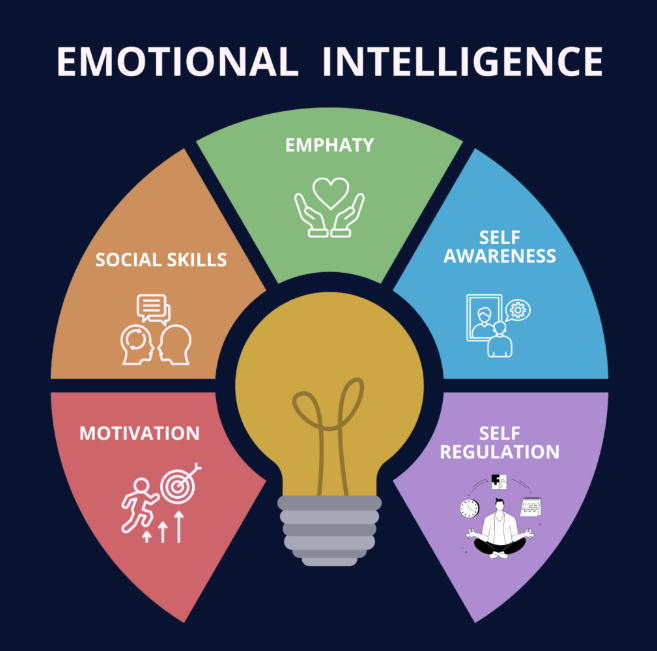
Leadership effectiveness is increasingly defined by more than authority, expertise, or positional power. It is shaped by a leader’s ability to understand people, manage emotions, and create psychologically safe environments where performance and innovation can thrive. Emotional intelligence encompasses five core components: self-awareness, self-regulation, motivation, empathy, and social skills (Goleman: 1998).
While technical competence and strategic thinking remain critical, research shows that emotional and social competencies account for a significant portion of leadership success, particularly at senior levels (Boyatzis et al.: 2019). Emotional intelligence acts as a silent driver of leadership impact. A leader who remains calm under pressure, listens attentively, and responds thoughtfully signals stability and credibility. In contrast, poor emotional regulation, defensiveness, or lack of empathy can erode trust and weaken influence.
Studies indicate that leaders with high emotional intelligence create more engaged teams, experience lower turnover, and achieve stronger performance outcomes (Bradberry & Greaves: 2009). This evidence underscores that EI is not merely a personal trait—it is a strategic leadership asset.
Why Emotional Intelligence Matters in the Digital Leadership Era
Leaders operating in digitally driven environments face unprecedented levels of complexity, speed, and uncertainty. Emotional intelligence plays a defining role in helping them navigate these challenges effectively.
Photo courtesy of protouch.com
First, it strengthens trust and human connection. In virtual and hybrid workplaces, trust cannot rely on proximity—it depends on communication quality, empathy, and consistency. Leaders who demonstrate emotional awareness and empathy build stronger psychological bonds with their teams, even across digital platforms (Goleman: 2013).
Second, it enhances decision-making under pressure. Digital environments often demand rapid decisions amid ambiguity. Emotional intelligence enables leaders to regulate stress, avoid reactive behavior, and think clearly in high-stakes situations (Boyatzis et al.: 2019).
Third, it improves communication clarity and influence. When leaders understand emotional dynamics, they communicate with greater sensitivity and impact. This reduces conflict, increases alignment, and strengthens commitment—especially during periods of transformation (Cherniss: 2010).
Fourth, it supports engagement and psychological safety. Leaders who listen, acknowledge emotions, and show respect foster environments where employees feel valued and safe to contribute ideas. Such climates are strongly linked to innovation and learning in digital organizations (Edmondson: 2018).
Finally, it enhances cross-cultural and global leadership effectiveness. In digitally connected organizations, leaders work across cultures, time zones, and values. Emotional intelligence helps them interpret emotional cues, manage cultural differences, and build inclusive relationships (Matsumoto & Hwang: 2013).
Linking Emotional Intelligence, Performance, and Change Leadership
The strategic value of emotional intelligence becomes most visible at the intersection of leadership, performance, and change management. Digital transformation is not primarily a technological challenge—it is a human one. Resistance to change, fear of uncertainty, and loss of control are emotional responses that leaders must address skillfully (Kotter: 2012).
Self-awareness enables leaders to recognize how their emotions influence their behavior and decisions. Self-regulation allows them to remain composed and credible during crises. Empathy helps them understand employee concerns and respond with clarity and respect. Social skills enable them to communicate vision, manage conflict, and mobilize commitment.
When emotional intelligence is integrated into leadership practice, it becomes a catalyst for sustainable performance. As Goleman (1998) argues, “The most effective leaders are alike in one crucial way: they all have a high degree of emotional intelligence.”
Building Emotionally Intelligent Leadership Through Deliberate Practice
Emotional intelligence is not fixed—it can be developed through intentional effort and reflective practice. Leaders can strengthen their EI by focusing on five key areas:
- Self-Awareness: Regular reflection, feedback, and coaching help leaders understand their emotional triggers and behavioral patterns.
- Emotional Regulation: Techniques such as mindfulness, stress management, and cognitive reframing support calm, balanced responses under pressure.
- Empathic Listening: Practicing active listening and perspective-taking enhances trust and relational quality.
- Relationship Management: Clear communication, constructive feedback, and conflict resolution skills strengthen collaboration.
- Purpose-Driven Leadership: Connecting work to meaning and values increases motivation, resilience, and engagement.
A longitudinal study of leadership development programs found that leaders who received emotional intelligence training improved team climate and performance indicators by over 20% within one year (Cherniss et al.: 2010). This confirms that emotional intelligence is not merely a personal advantage—it is a trainable, strategic leadership capability.
References
- Boyatzis, R., Goleman, D., & Rhee, K. (2019). Clustering competence in emotional intelligence. Journal of Management Development.
- Bradberry, T., & Greaves, J. (2009). Emotional Intelligence 2.0. TalentSmart.
- Cherniss, C. (2010). Emotional intelligence: Toward clarification of a concept. Industrial and Organizational Psychology.
- Edmondson, A. (2018). The Fearless Organization.
- Wiley. Goleman, D. (1998). Working with Emotional Intelligence.
- Bantam Books. Goleman, D. (2013). Focus: The Hidden Driver of Excellence. HarperCollins.
- Kotter, J. (2012). Leading Change. Harvard Business Review Press.
- Matsumoto, D., & Hwang, H. S. (2013). Cultural influences on emotional expression. Oxford Handbook of Culture and Psychology.
- World Economic Forum. (2020). The Future of Jobs Report. WEF.